Nature Study
-
Starting a Burgess Animal Book Club

It’s always a little easier to enjoy a school book when you have people to enjoy it with, the accountability of schedule, and a way to make deeper connections with the characters through relationship. Find out more about starting your own Burgess Animal Book Club here! The Burgess Animal Book for Children has so many…
-
Peter Rabbit, Eastern Cottontail
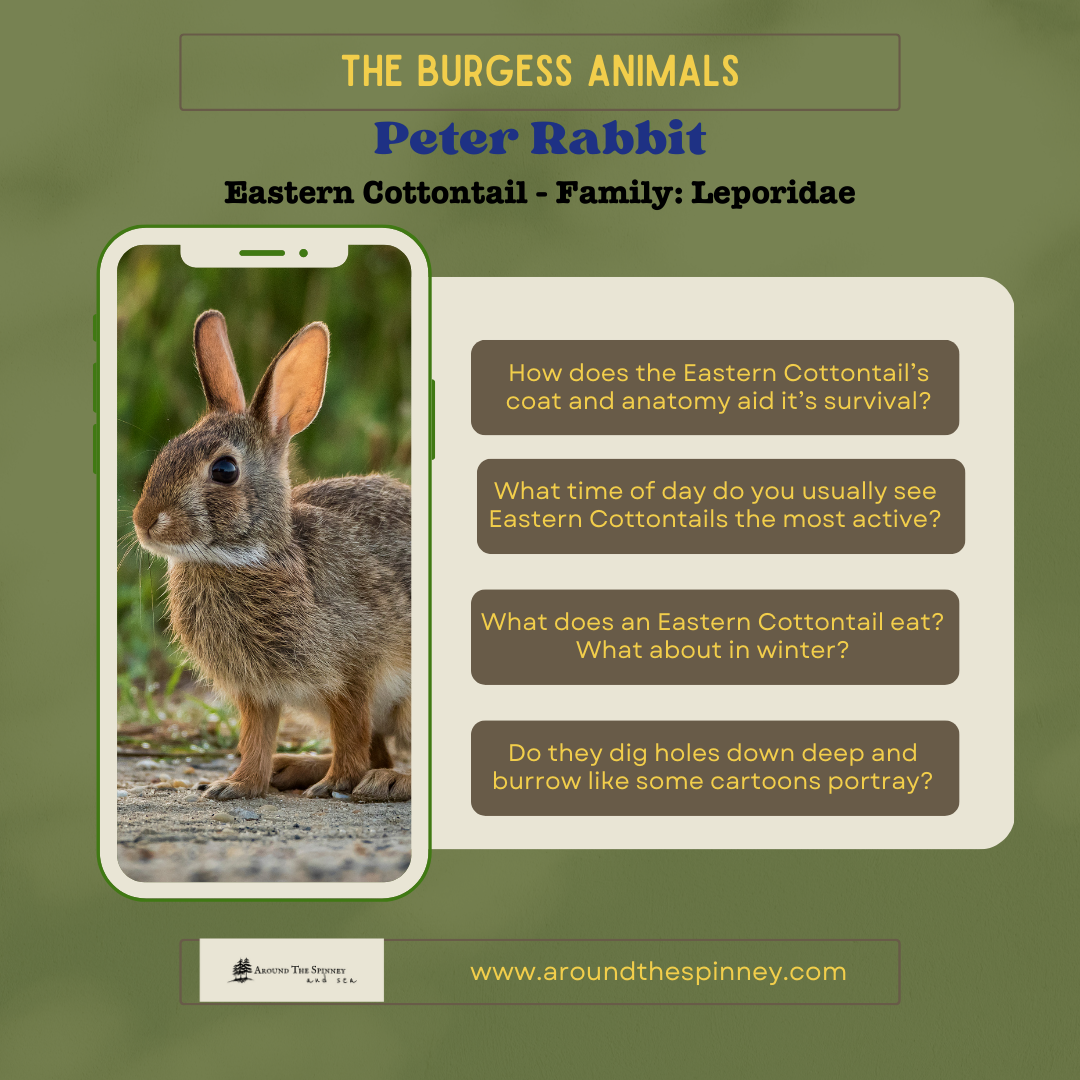
I find it helpful to start by asking what strikes your curiosity about Eastern Cottontails? What have you wondered about them when you see them around? Discuss the questions you have and those found below together before looking to the answers next. Here are some answers, but there is even more to discover about each…
-
Kitty, the Gray Catbird
-
Weechi, the Magnolia Warbler
Bold in black and yellow is the Magnolia Warbler! As we have seen in The Burgess Bird Book for Children, there are many warblers with black, yellow, and white patterns, but the Magnolia Warbler takes the cake with his striking combination. Burgess describes him like this, The top of his head and the back of his neck…
-
Fidget, the Yellow-rumped Warbler

-
Sprite, the Northern Parula
As quickly as the Warblers arrived, they left. In Burgess’ classic “The Burgess Bird Book for Children,” Peter finds a Warbler that stays in the Green Forest, the Northern Parula. He notices Sprite by finding his nest which looks like a bunch of moss hanging from a tree. Cornell Lab explains that Northern Parulas actually…
-
Chut-Chut, the Yellow-breasted Chat

Thornton W. Burgess writes about Chut-Chut being a little different from the other Warblers. He mentions the Yellow-breasted Chat’s difference in size, being a little larger than other Warblers, and even his cautious behavior. This is a really interesting case for those who love Natural History because at the time that “The Burgess Bird Book…
-
Mummer, the Common Yellowthroat
Talk about making a statement, the Common Yellowthroat is easy to identify by his black face mask. The females do not have the black masks, but otherwise look very similar with yellow throats and a little more brown along their backs. The Common Yellowthroat is another Warbler who is often prey to Brown-headed Cowbirds’ brood…
-
Creeper, the Black and White Warbler
The Black and White Warbler could easily be misidentified as a Brown Creeper because even as Peter Rabbit notices, they act similarly. Listen in on Creeper’s tactic for his very un-Warbler, Nuthatch-like behavior: “I’m going to let you into a little secret, Peter. The rest of them (Warblers) get their living from the leaves and…
-
Sunshine, the Yellow Warbler

I would love to meet someone named Sunshine, wouldn’t you? Peter Rabbit meets Sunshine in Ch. 24 of Thornton W. Burgess’ classic, “The Burgess Bird Book for Children.” Sunshine is a Yellow Warbler and perfectly named for his bright yellow feathers, although he isn’t entirely yellow but also has reddish brown streaks on his breast…